
Twenty years ago, American voters handed Democrats control of both houses of Congress while Republican President George W. Bush remained in the White House. The country was dealing with a costly war, frustration over Washington, and an increasingly uneasy electorate. The economy was still growing, unemployment was relatively low, and corporate America was making money.
Voters wanted change anyway.
Twenty years later, voters have delivered another substantial shift in political power. Democrats have won control of both chambers of Congress, and President Trump will spend the remaining two years of his term navigating divided government.
The financial markets responded with considerable anxiety. Technology shares came under pressure, energy stocks declined, and investors began recalculating the political risks associated with industries that have been central to economic growth.
What interests me most about this election is the disconnect between the condition of the economy and the message voters delivered.
The economic data were actually quite good. Unfortunately for the party in power, the voters were looking at a different set of numbers.
The Economy Was Doing Its Job
The October employment report, released just three days after the election, showed that the economy added 165,000 jobs. Unemployment stood at 4.1%, and hiring exceeded expectations.
The economy has produced an uneven but continuing expansion in employment. Over the past 12 months, monthly payroll gains have averaged approximately 74,000. October’s improvement was encouraging, particularly after several months of disappointing results.
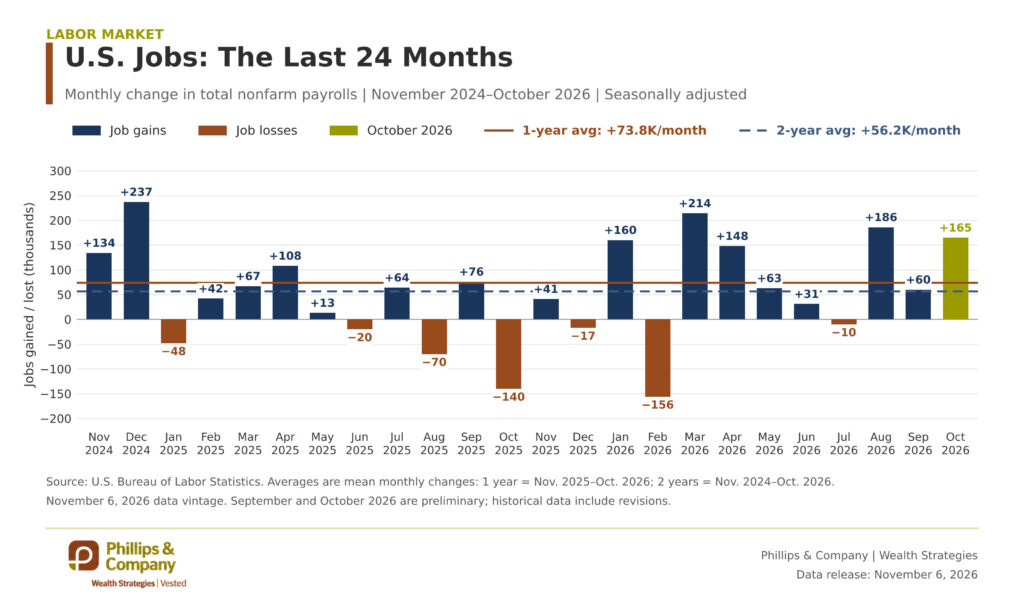
The composition of job growth was equally encouraging. Professional and business services added 70,000 positions, health care and social assistance gained approximately 55,000, and manufacturing added another 19,000. Transportation and warehousing also participated.
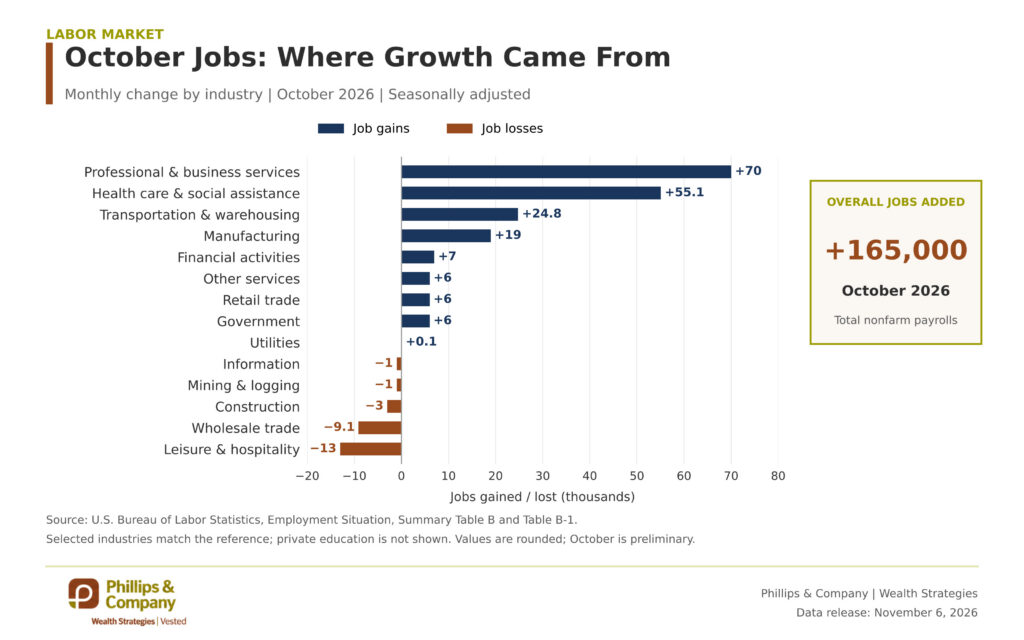
This is an important development. We have spent considerable time discussing the concentration of economic growth in relatively narrow portions of the economy. Broader hiring across industries would give the expansion a healthier foundation.
Corporate earnings have also remained resilient, supported by investment spending, productivity gains, and consumers who continue to participate in the economy despite the pressures on their household budgets.
Our productivity work provides another encouraging observation. Through the second quarter, industries with greater adoption of artificial intelligence were generating productivity growth of approximately 6.4%, compared with 1.1% across the rest of the private sector.
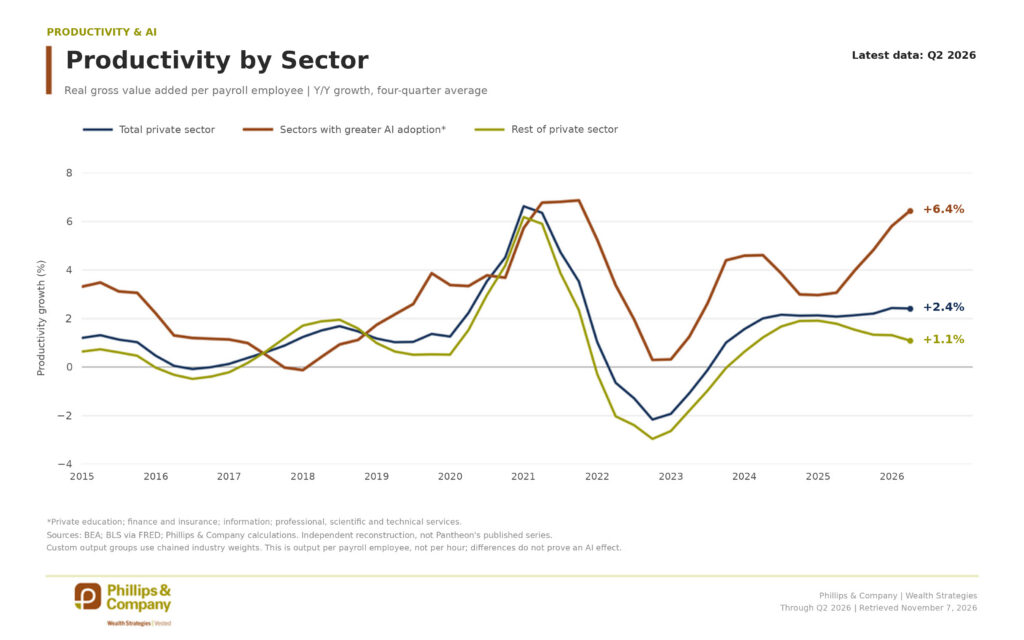
For investors, these developments matter. A productive economy can support earnings growth, higher real incomes, and improved business profitability.
For voters, however, there was another consideration.
The Price of Everything
When Americans entered the voting booth, they probably were not thinking about productivity statistics, corporate earnings, or the latest employment report. They were thinking about what it cost to fill their grocery carts, insure their homes, pay their electric bills, and take care of their families.
And many of them were wondering why, after several years of economic growth, their paychecks still did not seem to go far enough.
This frustration is understandable.
Average hourly earnings increased 3.2% over the year ending in September. Headline consumer prices increased 3.7%. That left wage growth approximately half a percentage point behind inflation.
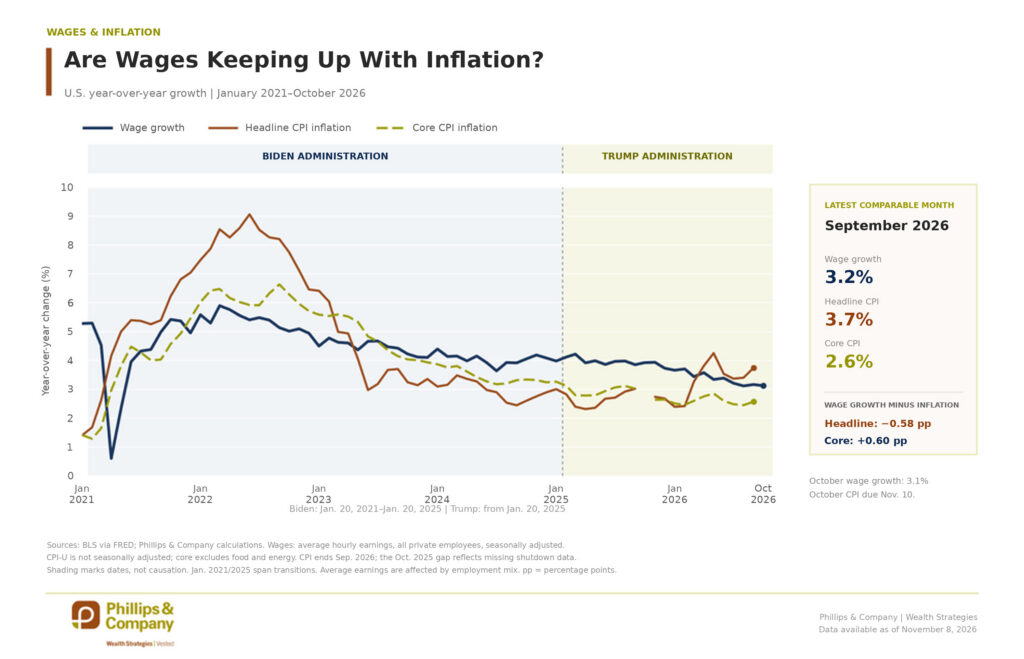
Core inflation, which excludes food and energy, was lower at 2.6%. So the picture is more nuanced than simply declaring that wages are losing purchasing power everywhere. But households pay for food and energy, and those expenditures have an immediate influence on how people judge their economic circumstances.
October wage growth subsequently slowed to 3.1%, with the October inflation report still to come.
There is another problem that annual inflation statistics do not fully capture.
When inflation slows, prices generally continue to rise, just at a slower rate. The cumulative increases of the past several years remain embedded in the cost of living.
A household whose expenses have risen substantially since 2021 does not feel much relief simply because the latest inflation reading is below its previous peak.
The same frustration contributed to the political challenges faced by Democrats during the Biden administration. Now Republicans have experienced their own version of that dissatisfaction.
The lesson for both parties should be fairly clear. Economic growth matters, but household purchasing power matters more when voters are deciding whether Washington deserves another opportunity.
Prices brought political change, and that change will now influence the economic policies investors must evaluate.
When Politics Meets the Price of Growth
The market’s reaction following the election provided a particularly interesting example of how quickly political expectations can affect investment valuations.
Technology stocks, especially companies associated with artificial intelligence and data-center construction, were hit hard. Energy stocks also suffered. The S&P 500 declined approximately 2.7% during the week, while losses in technology and energy were substantially greater.
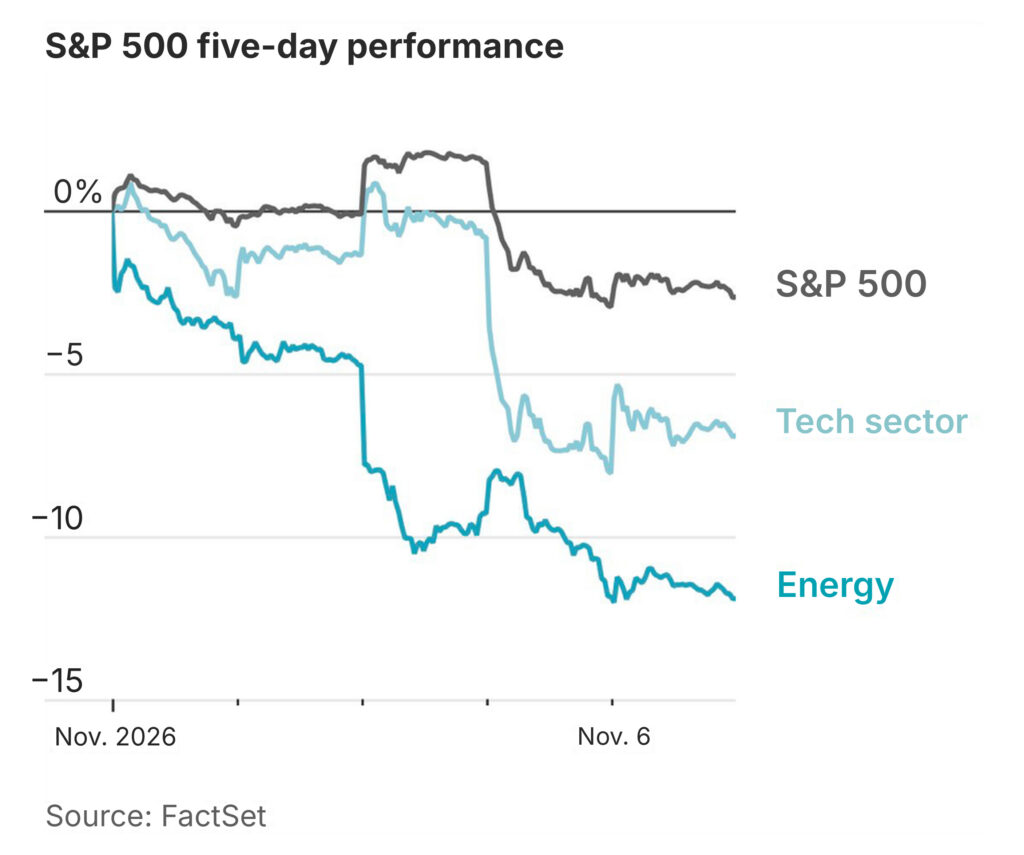
The concern surrounding data centers deserves attention because these facilities have become an increasingly important source of capital investment.
The construction pipeline is enormous. One industry estimate places approximately $301 billion of data-center construction underway, with another substantial amount of development planned or contemplated.
The broader pipeline exceeds $1.9 trillion, although much of that represents proposed projects rather than committed spending. It would be a mistake to assume every project will be built.
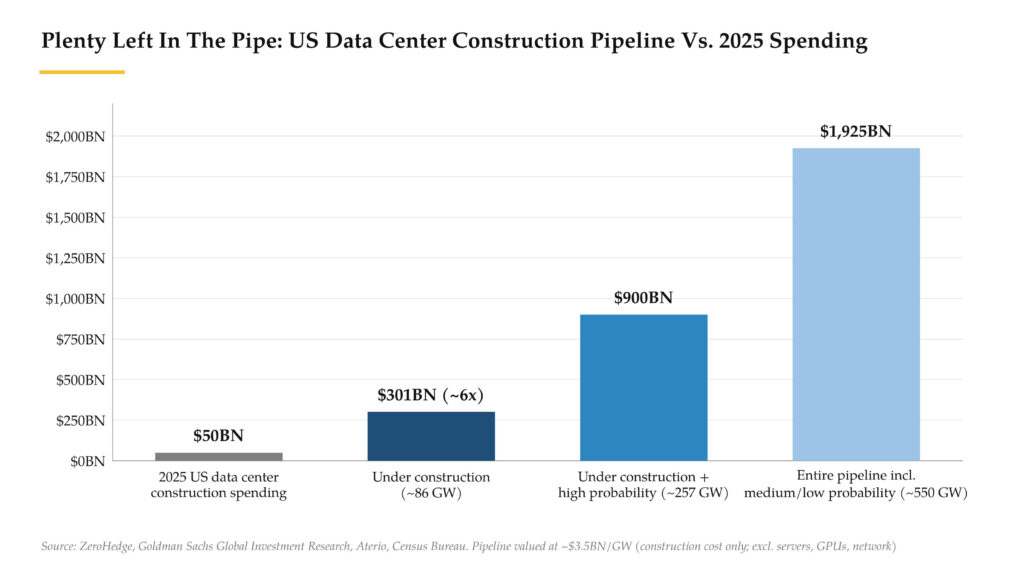
Investors have good reason to care about the distinction.
Data centers require enormous quantities of electricity, electrical equipment, cooling systems, construction materials, and increasingly sophisticated semiconductor technology. They support activity across much of the economy, well beyond the largest technology companies.
The market has also assigned considerable value to the expectation that this investment will continue.
That helps explain why the new political attention toward data centers produced such an abrupt market reaction.
Texas offered a revealing example.
Governor-elect Gina Hinojosa called for a pause in new data-center approvals until protections could be enacted for residents and communities. The proposal raised questions about the future of development in one of the nation’s most important data-center markets.
Within days, however, her public comments emphasized Texas’s pro-business history and the need for partnerships that benefit residents.
I find this transition instructive.
Campaigning allows politicians to identify problems and promise change. Governing requires them to consider the consequences of those promises.
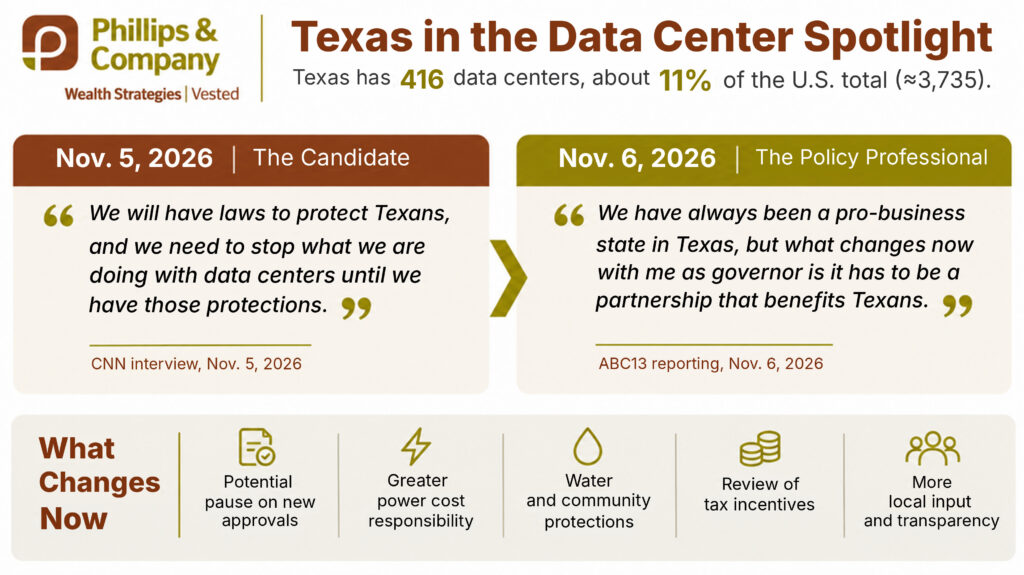
Texas wants economic development. Its residents also want affordable electricity, adequate water supplies, and assurance that the costs of new infrastructure will not simply be passed along to households.
Those are legitimate concerns. They also create opportunities for businesses capable of providing power, transmission, efficiency improvements, and infrastructure solutions.
The eventual policy outcome may be more demanding permitting, greater cost responsibility for developers, and fewer tax incentives. That would alter project economics, but it would not necessarily eliminate the underlying demand for computing capacity.
I suspect we will see more of this distinction between political campaigning and practical policymaking as the new Congress begins its work.
Washington’s Next Assignment
One of the people I will be watching closely is Congressman Richard Neal of Massachusetts, who is positioned to return as chairman of the House Ways and Means Committee.
Neal is an experienced legislator who has chaired the committee before. His responsibilities will include taxes, trade, significant portions of health care policy, and Social Security.
He will also be operating in an environment where Democrats control Congress but President Trump retains the veto.
That matters. The election has changed the balance of power, but it has not eliminated the need for compromise.
The New Democrat Coalition, representing the more business-oriented and pragmatic portion of the Democratic caucus, has developed an agenda focused on affordability, economic opportunity, tax reform, and fiscal responsibility.
Several proposals deserve particular attention:
- Tax policy: Greater scrutiny of tax benefits for wealthy households and corporations, along with expanded relief for working families and improved incentives for small businesses.
- Health care: Extension of Affordable Care Act premium subsidies, additional prescription-drug pricing reforms, and greater attention to the cost of health insurance.
- Energy and infrastructure: Faster permitting for power generation and transmission, combined with requirements that large electricity users, including data centers, bear more of their infrastructure costs.
- Housing and families: Expanded housing tax credits, additional support for childcare and working families, and efforts to reduce barriers to housing construction.
- Trade and fiscal policy: Greater scrutiny of tariffs, tax expenditures, and federal spending, with renewed debate over how Washington pays for its commitments.
These priorities reflect the direction of the New Democrats’ agenda. They are not enacted legislation, and Neal will have his own priorities as the committee takes shape.
I expect considerable attention to health care because it represents one of the largest and most persistent pressures on household budgets. Prescription-drug manufacturers, insurers, hospitals, and other health care companies will each have reasons to pay attention.
Taxes are likely to generate plenty of headlines as well. Investors should expect examination of corporate incentives, high-income tax preferences, and selected provisions of the 2025 tax legislation.
There is an important distinction between investigating a tax provision, advancing legislation through a congressional committee, and actually changing the law.
With a Republican president, Senate procedural requirements, and substantial differences within the Democratic caucus, sweeping changes will be difficult. More targeted agreements are possible, especially where affordability and economic competitiveness overlap.
And I would not underestimate the moderating influence of the responsibility to govern.
Markets Have Seen This Before
Political uncertainty can make investors uncomfortable, particularly when markets are already carrying elevated valuations in some of their most important industries. But political transitions have happened many times before, and the longer-term investment record is considerably more encouraging than the immediate headlines often suggest.
Our historical work examined three major swings in congressional voting toward Democrats: 1948, 1974, and 2006.
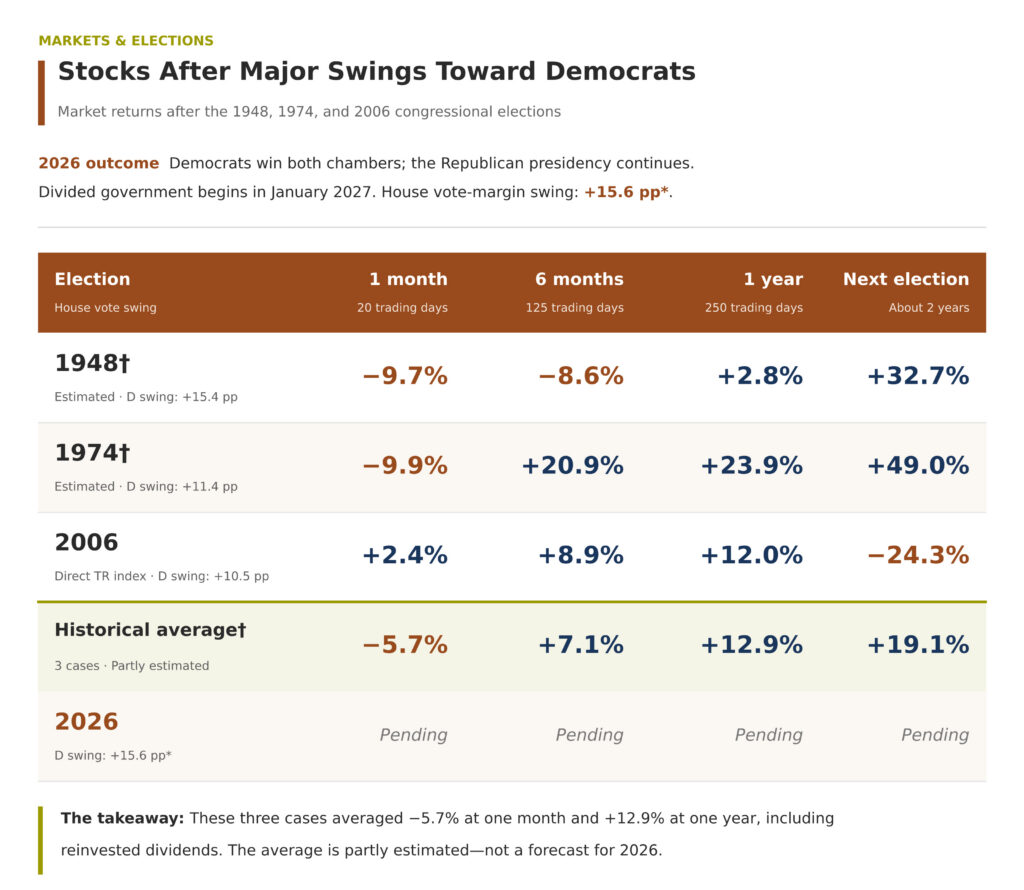
The immediate market responses varied considerably. On average, stocks declined approximately 5.7% during the first month following those elections.
Yet the average total return over the following year was positive 12.9%, including dividends. By the next national election, the average cumulative gain was approximately 19.1%.
Corporate profits, credit conditions, interest rates, and the availability of capital ultimately matter considerably more than which party controls a committee.
That is where I intend to keep our attention.
Looking Ahead
The next few months will bring substantial political debate. We should expect investigations, legislative proposals, and some uncomfortable headlines for industries that have benefited from favorable tax treatment or rapid investment growth.
We should also remember what the economic data are telling us.
Businesses continue to hire. Productivity is improving. Corporate America is investing in technologies that have the potential to improve economic output for years to come. The consumer has demonstrated remarkable resilience, although higher prices remain a genuine burden.
The challenges are equally clear. Inflation has not been defeated, higher interest rates raise the cost of borrowing, and some market valuations depend on expectations for growth that have not yet been fully realized.
Those considerations deserve thoughtful portfolio management. They do not justify making abrupt investment decisions based solely on the results of an election.
There will be winners and losers as the policy agenda develops. Health care reform, infrastructure investment, tax changes, and the economics of data-center construction will create different outcomes across industries and companies. We will continue evaluating those developments against earnings, valuations, and the longer-term prospects of the businesses we own.
Voters have asked Washington to address the cost of living. Investors will now watch how Washington responds without undermining the growth that ultimately supports household incomes and investment returns.
I remain constructive about the economy’s longer-term prospects, with an appreciation for the risks that come with elevated expectations and a changing political environment.
There is work ahead for both policymakers and investors. Fortunately, a healthy economy gives both a better place to start.
If you have questions or comments, please let us know. You can contact us via X and Facebook, LinkedIn, or you can e-mail Tim directly. For additional information, please visit our website.
Tim Phillips, CEO, Phillips & Company
Sources & Data References:
U.S. Bureau of Labor Statistics (Employment Situation, Average Hourly Earnings, Consumer Price Index); Bureau of Economic Analysis (GDP and Industry Productivity); Federal Reserve Economic Data (FRED); FactSet (S&P 500 and sector performance); Goldman Sachs Global Investment Research and Aterio (data-center construction and investment pipeline); CNN and ABC13 (Texas governor-elect statements); U.S. House of Representatives, House Ways and Means Committee, and New Democrat Coalition (legislative priorities and tax policy); S&P Dow Jones Indices, Robert Shiller, Yahoo Finance, Reuters, and Bespoke Investment Group (historical election outcomes and market returns). Phillips & Company research and calculations. Data through November 8, 2026, where available. Historical market performance does not guarantee future results.
The charts and data presented are sourced from a combination of public domain materials and licensed data providers. Their use is intended solely for educational and analytical commentary and falls within the scope of fair use. For a representative list of sources, please click here.
The material contained within (including any attachments or links) is for educational purposes only and is not intended to be relied upon as a forecast, research, or investment advice, nor should it be considered as a recommendation, offer, or solicitation for the purchase or sale of any security, or to adopt a specific investment strategy. The information contained herein is obtained from sources believed to be reliable, but its accuracy or completeness is not guaranteed. All opinions expressed are subject to change without notice. Investment decisions should be made based on an investor’s objective.