
The world’s largest companies are placing trillion-dollar bets on AI. This week’s earnings reports will tell us whether they’re just getting started.
Every generation has its “this is crazy” moment.
In the 1850s, investors thought railroad companies were laying too much track. There weren’t enough passengers, enough freight, or enough towns to justify the investment. Yet without that seemingly excessive capital spending, America would never have become an industrial powerhouse.
Decades later, electric utilities were criticized for building power grids that looked far larger than demand required. Telephone companies buried millions of miles of copper before every home owned a telephone. The internet required billions of dollars of fiber optic cable long before businesses relied on websites or consumers streamed movies from their living rooms.
Every one of those investments looked expensive, yet every one of them changed the world.
Today, we’re watching history rhyme.
The debate isn’t whether artificial intelligence will transform the economy. The real question is whether today’s extraordinary investment in AI infrastructure is excessive—or simply the price of building tomorrow’s economy.
This week, we’ll get one of our best opportunities yet to answer that question as Microsoft, Meta, Amazon and Apple report earnings. Wall Street will spend hours debating whether they beat earnings estimates by a few pennies. I’ll be listening for something much more important.
Are the world’s best businesses still writing enormous checks to build the future?
Every major technological revolution has followed remarkably similar patterns. First comes infrastructure, then comes adoption and finally comes productivity.
Railroads were built before trains were full and electric grids were constructed before every factory plugged in.
The internet existed long before most businesses understood how to use it.
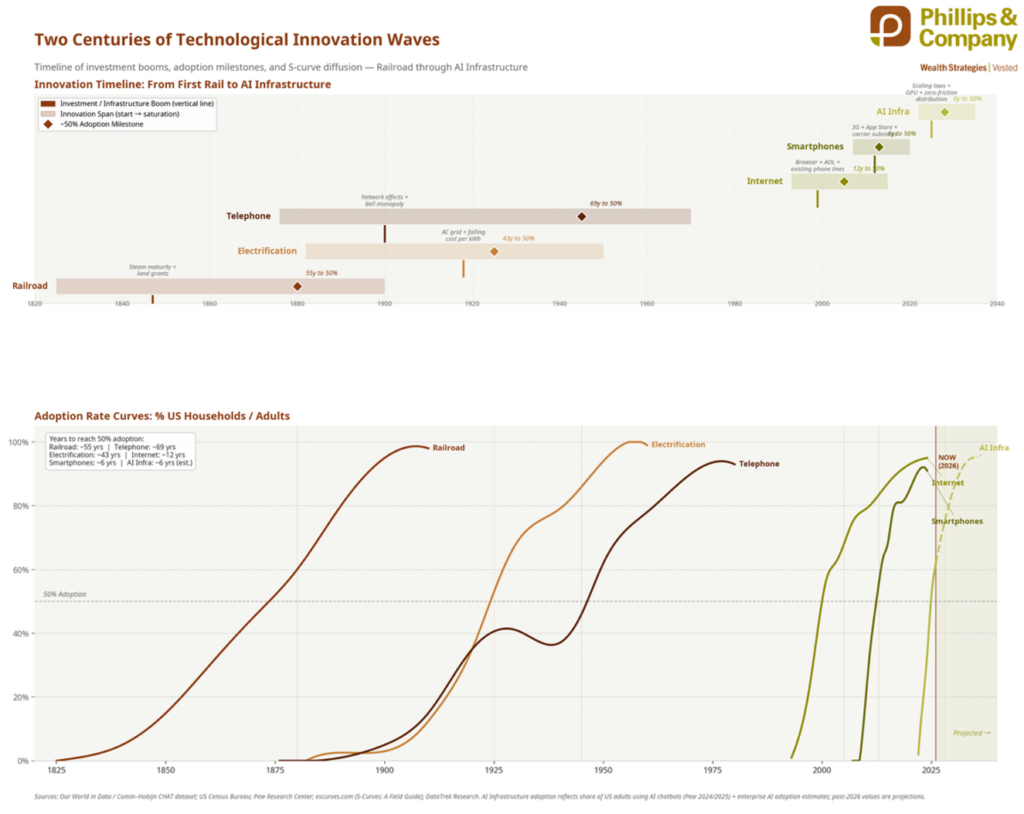
Artificial intelligence isn’t following a new playbook. It’s following the same playbook that every transformational technology has followed for the last 200 years.
Perhaps the most striking observation is how each innovation reached mass adoption faster than the one before it. Railroads took decades. Telephones accelerated that timeline. Smartphones reached critical mass in only a few years.
AI appears to be moving even faster. History suggests one important lesson: rapid adoption requires rapid investment. That investment is what we’re witnessing today.
Capital allocation tells you what management believes—not what they say. Collectively, Amazon, Microsoft, Alphabet, Meta and Oracle are on pace to spend nearly one trillion dollars building AI infrastructure over the next two years.
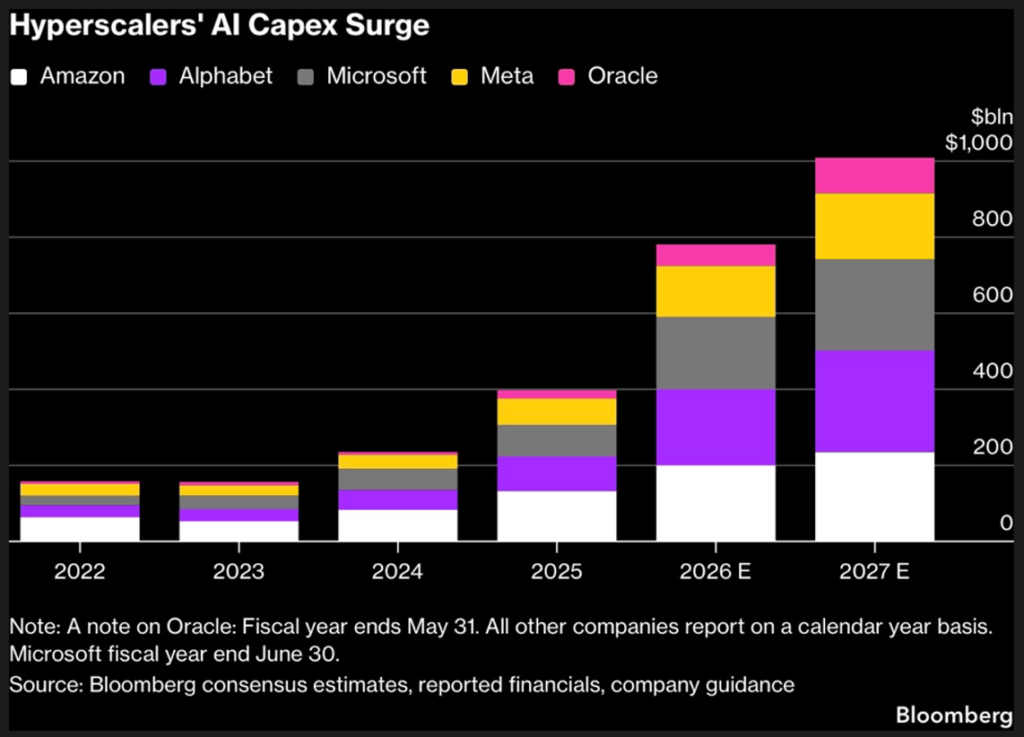
That’s an astonishing number. But it shouldn’t surprise us. Infrastructure always comes first.
No company spends hundreds of billions of dollars because business looks good for one quarter. They make investments of this magnitude because they believe demand will continue growing for many years.
In many ways, today’s AI data centers are no different than yesterday’s railroads, electrical grids or fiber optic networks; they are laying the tracks before the trains arrive.
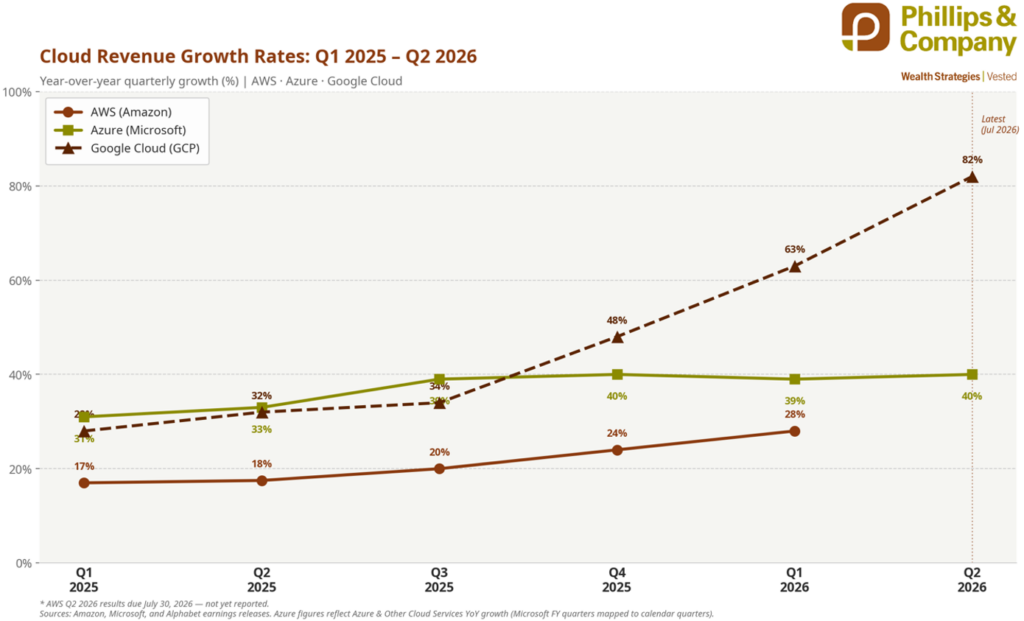
The obvious question becomes:
Is all of this spending actually generating demand? The answer increasingly appears to be yes. Amazon Web Services continues to accelerate. Microsoft Azure continues to grow at roughly 40%.
Google Cloud has become one of the fastest-growing businesses anywhere in large-cap technology.
These aren’t mature businesses fighting over existing customers. They are serving an expanding market where enterprise demand continues to accelerate.
Companies don’t spend this kind of money because demand was strong yesterday. They spend because they believe demand will be even stronger tomorrow.
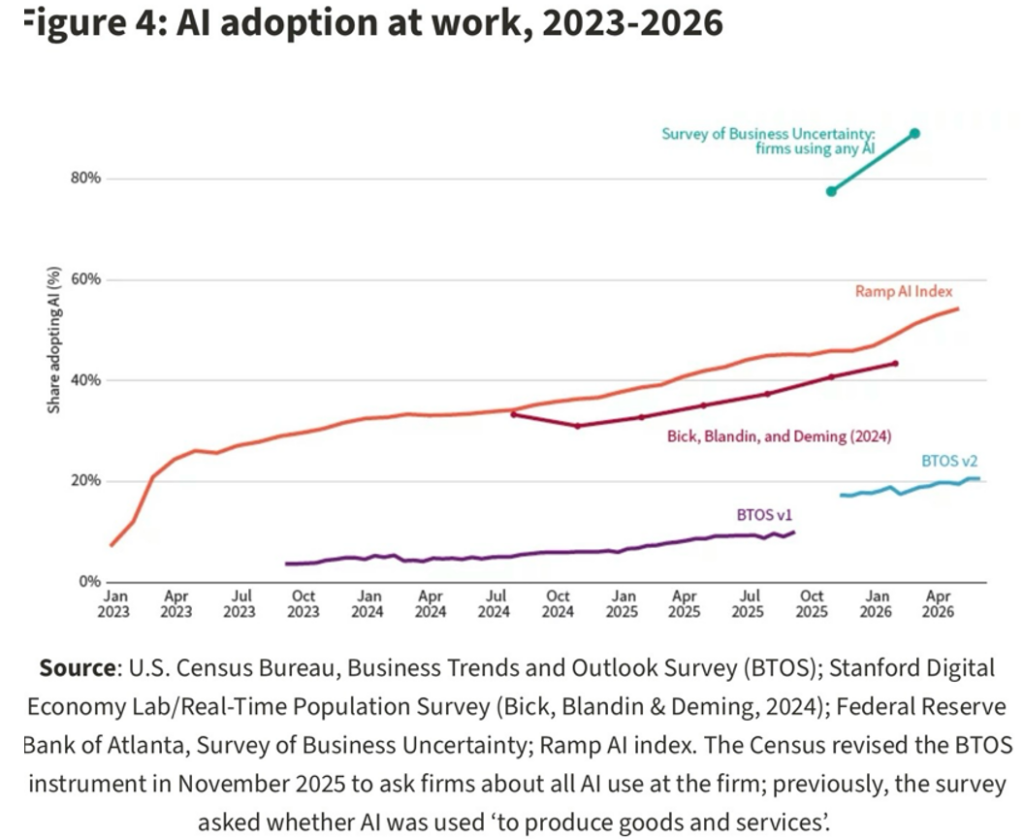
Despite the nonstop headlines surrounding artificial intelligence, we’re still remarkably early. Most businesses have experimented with AI.
Far fewer have redesigned how work actually gets done. The adoption curve is climbing rapidly, but history tells us that widespread productivity gains don’t occur when a technology is first introduced. They occur when businesses begin reorganizing themselves around it.
That’s exactly where we appear to be today. The AI story is becoming less about experimentation and more about implementation. And implementation requires infrastructure.
Artificial intelligence isn’t saving people two or three minutes.
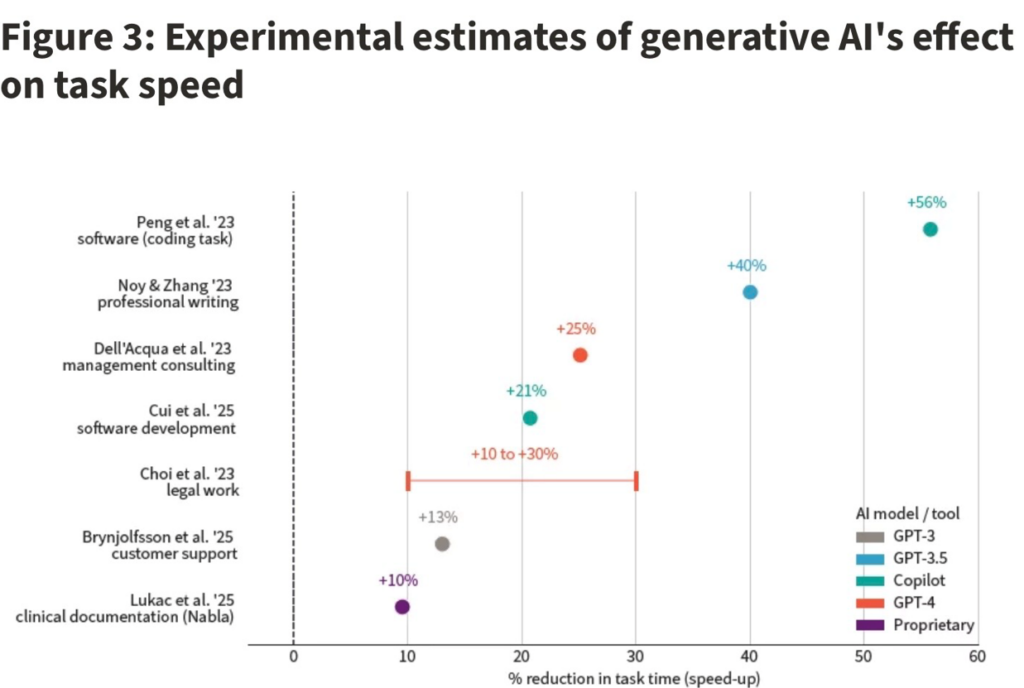
It’s reducing task completion times by 20%, 40%, and in some cases more than 50%.
When businesses discover they can produce meaningfully more output using the same number of employees, investing in AI infrastructure stops looking like discretionary spending and becomes an economic necessity.
The return on investment isn’t theoretical anymore.
Ultimately, markets don’t reward technology.
They reward results, and this is where the story becomes especially compelling.
Corporate America is delivering its strongest earnings guidance momentum in more than a decade.
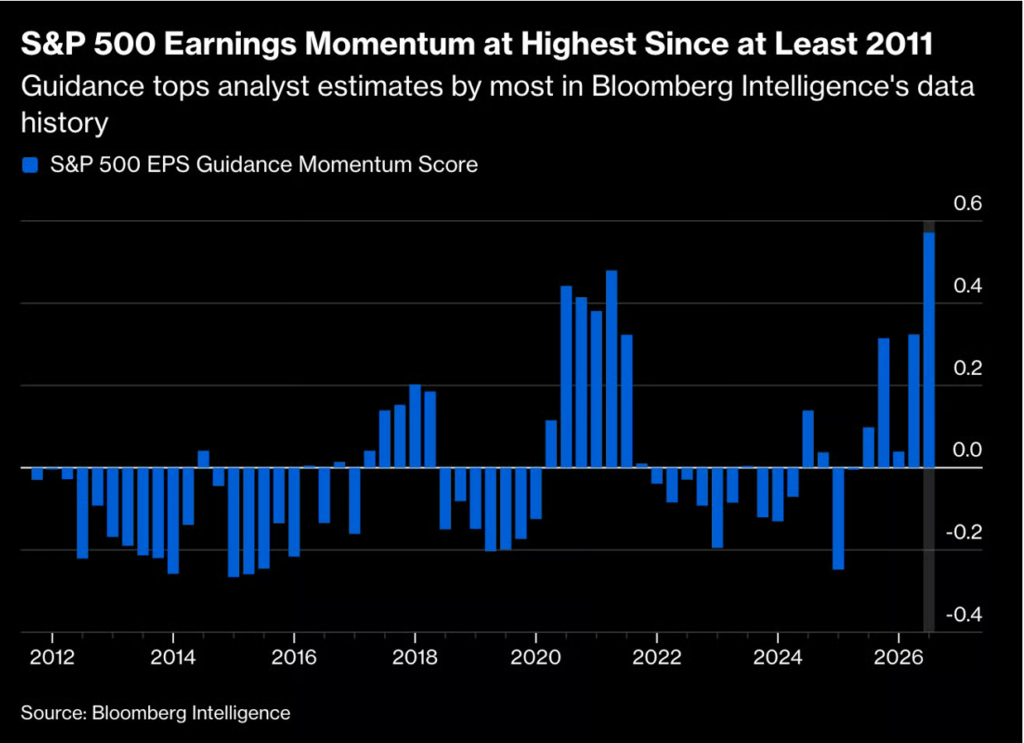
That’s an extraordinary backdrop heading into one of the most important earnings weeks of the year.
All of this tech spending isn’t occurring in isolation. It’s happening while corporate profitability remains healthy and management teams continue raising expectations.
Markets rarely move in straight lines.
They move in bursts. Investors spend weeks—or even months—building a narrative. Then a handful of earnings reports either confirm it or destroy it.
This week could be one of those moments.
Microsoft.
Meta.
Amazon.
Apple.
Together they represent trillions of dollars in market value and an even larger share of global AI investment.
We’ll learn whether cloud demand continues accelerating, whether enterprise customers are increasing adoption, whether capital spending remains aggressive, and whether management teams still believe the opportunity ahead is larger than the investment required today.
If the answers remain ‘yes,’ then history may eventually look back on this period the same way it views the construction of the railroads, the electrical grid, and the internet.
That would be the moment these companies built the foundation for the next generation of economic growth.
If you have questions or comments, please let us know. You can contact us via X and Facebook, or you can e-mail Tim directly. For additional information, please visit our website.
Tim Phillips, CEO, Phillips & Company
Sources & Data References:
Bloomberg Intelligence – Hyperscaler AI Capital Expenditure Estimates, Bloomberg Intelligence – S&P 500 Earnings Guidance Momentum, Company earnings reports: Amazon, Microsoft, Alphabet, U.S. Census Bureau Business Trends and Outlook Survey (BTOS), Stanford Digital Economy Lab, Federal Reserve Bank of Atlanta Survey of Business Uncertainty, Academic productivity studies: Peng et al. (2023), Noy & Zhang (2023), Dell’Acqua et al. (2023), Brynjolfsson et al. (2025), Cui et al. (2025)
The charts and data presented are sourced from a combination of public domain materials and licensed data providers. Their use is intended solely for educational and analytical commentary and falls within the scope of fair use. For a representative list of sources, please click here.
The material contained within (including any attachments or links) is for educational purposes only and is not intended to be relied upon as a forecast, research, or investment advice, nor should it be considered as a recommendation, offer, or solicitation for the purchase or sale of any security, or to adopt a specific investment strategy. The information contained herein is obtained from sources believed to be reliable, but its accuracy or completeness is not guaranteed. All opinions expressed are subject to change without notice. Investment decisions should be made based on an investor’s objective.