
There is an old habit in Washington that works pretty well right up until the point it doesn’t: When something gets expensive, subsidize it.
Housing too expensive—help with the down payment. Energy too expensive—send a credit. Consumers unhappy about prices—send them a check.
There is a certain elegance to this approach. Unfortunately, economics occasionally gets in the way.
We are drifting toward another rate hike. Inflation has stopped behaving as well as everyone hoped, federal spending remains aggressive, and now we have a proposal to send $5,000 to every adult American.
The bond market seems less amused by this latest proposal.
The 10-year Treasury has moved from roughly 4% in late February to around 5% today. Since early July, the move has been close to 50 basis points. That may sound like a rounding error. In the bond market, it isn’t.
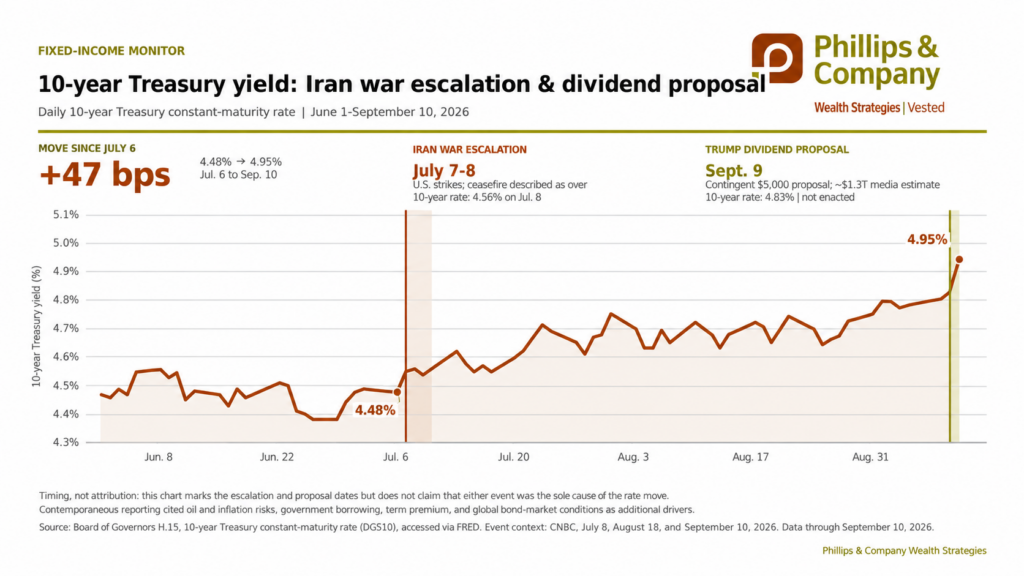
There are plenty of explanations for the move. Oil has risen. The conflict with Iran has added another inflation variable. Treasury issuance remains enormous, and investors want more compensation for owning long-dated government debt.
Oh, and inflation is still hanging around.
It is no longer the 2022 version where every trip to the grocery store felt like a monetary-policy seminar. But the underlying pressure is still there. Shelter, medical care, education, transportation services, and several other categories continue to rise at rates that are uncomfortable for a Federal Reserve trying to get inflation back toward 2%.
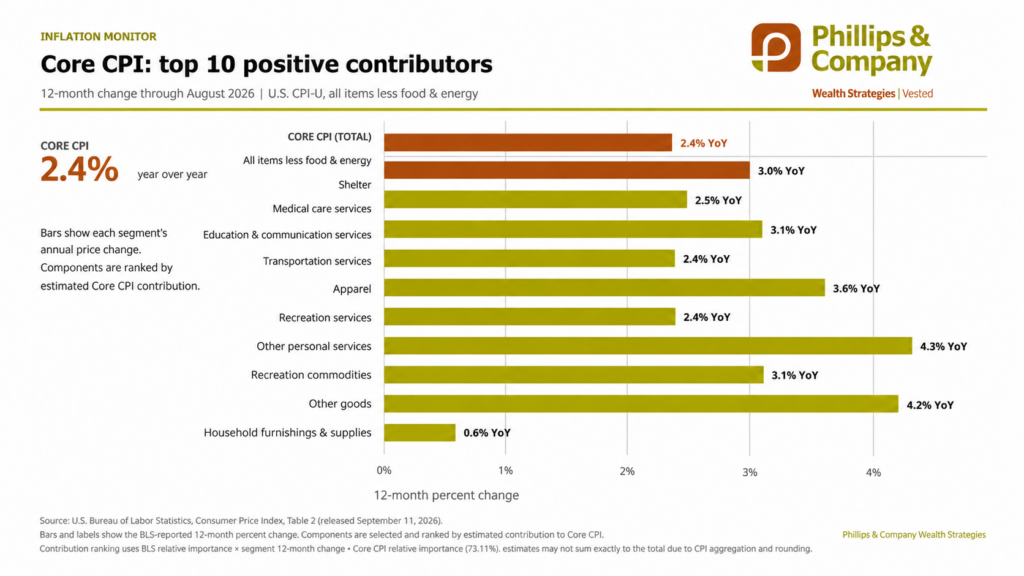
The Fed can tolerate some noise, but it has less patience for inflation that looks persistent.
At the same time, the federal government continues to run very large deficits. We are borrowing a lot of money while the cost of borrowing that money is rising. That generally isn’t the preferred combination.
You can see it further out on the yield curve.
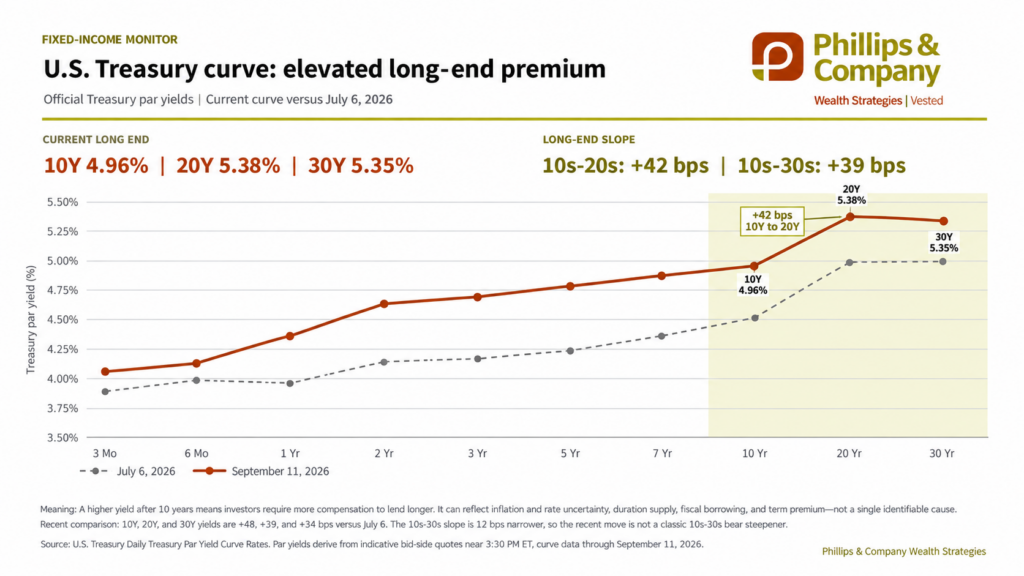
The 10-year is near 5%. The 20-year is above 5.3%. The 30-year is about the same. Investors are asking to be paid considerably more to lend money to Washington for a long time.
Then came the proposed $5,000 dividend.
Calling it a dividend is doing some heavy lifting.
A dividend normally comes from excess profits or excess capital. The federal government currently has neither. We have deficits, debt and borrowing needs. Sending out another very large round of checks would therefore look considerably more like fiscal stimulus than a corporate dividend.
And the scale matters.
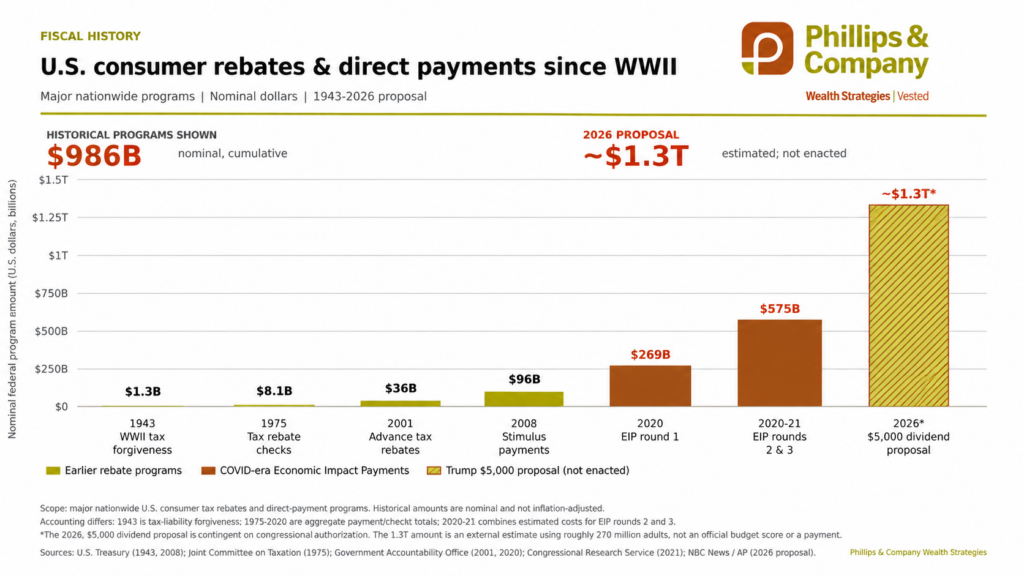
The 1975 rebates were about $8 billion. The 2001 rebates were roughly $36 billion. The 2008 stimulus payments were around $96 billion. COVID took this idea to another level.
The current proposal, depending on eligibility, could approach $1.3 trillion.
That is a very large amount of purchasing power to inject into an economy where inflation is still proving difficult to kill.
Maybe Congress pares it back. Maybe it never happens. Political proposals often have a longer life on television than they do in legislation.
But markets do not have the luxury of waiting until every detail is settled. They price probabilities. And right now the probability of higher-for-longer rates is increasing.
This brings us to stocks.
Corporate earnings remain surprisingly strong. FactSet’s August estimate had S&P 500 earnings growing 27.4% in the third quarter and 25.2% in the fourth quarter. Full-year earnings growth was projected at 30%.
Those are very good numbers.
They also don’t settle the valuation question.
A company can earn more money and still become less valuable in the stock market if investors decide they are no longer willing to pay as much for each dollar of future earnings.
That sounds contradictory until you remember what a stock actually represents.
You are buying future cash flows. If someone promises to pay you $100 ten years from now, the amount you would pay for that promise today depends on what return you require while you wait.
At a 6% required return, that $100 is worth about $56 today.
At 8%, it is worth about $46.
At 10%, about $39.
Nothing happened to the $100—just the waiting became more expensive.
Stocks work the same way.
When Treasury yields rise, the hurdle rate for everything else rises with them. Investors can earn close to 5% lending money to the U.S. government. A stock had better offer enough additional return to justify the risk.
That means future corporate cash flows get discounted more heavily. And that means investors tend to pay lower multiples.
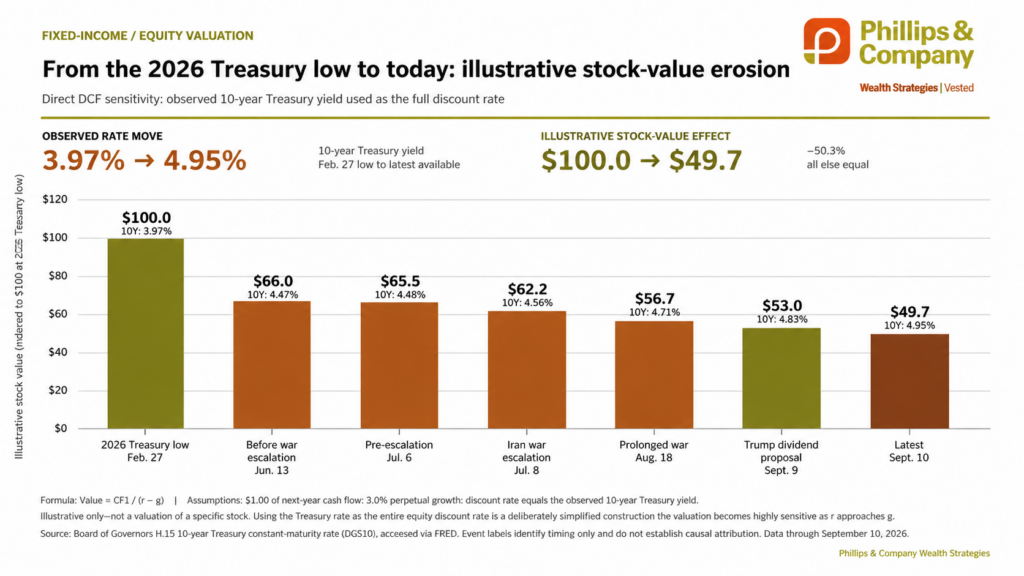
This matters most for businesses where a large portion of the expected value sits years in the future. Growth stocks naturally have more sensitivity to rates because more of what you are paying for has not happened yet.
Companies throwing off large amounts of cash today have less of that problem. None of this means earnings suddenly collapse. In fact, earnings growth may remain quite good.
The problem is that earnings growth and valuation can pull in opposite directions.
Suppose earnings rise 20% and investors decide to pay 10% less for those earnings. You can still make money. You just don’t make as much as the earnings growth number might suggest.
For several years, investors had a very pleasant arrangement. Earnings grew and interest rates were low. That combination made higher valuations easier to justify.
A 5% Treasury changes the arithmetic.
This is where I think we are headed.
Inflation is still sticky enough to bother the Fed. Washington continues to spend aggressively. Long-term borrowing costs are rising. And now we are discussing another enormous fiscal payment program that could add demand to an economy already struggling to get inflation completely under control.
The Fed may decide it has to respond, and it might just respond this week with higher rates. Oddly, in the short run investors might cheer.
I’m not as concerned in the short run about corporate profits. I’m more concerned about what investors deduce the value of the cash flows to be at higher rates.
If you have questions or comments, please let us know. You can contact us via X and Facebook, or you can e-mail Tim directly. For additional information, please visit our website.
Tim Phillips, CEO, Phillips & Company
Sources & Data References:
U.S. Treasury and Federal Reserve H.15 data for the 10-year Treasury and yield-curve discussion; U.S. Bureau of Labor Statistics CPI data through August 2026 for inflation and component trends; U.S. Treasury, Joint Committee on Taxation, GAO and Congressional Research Service data for prior rebate and direct-payment programs; and FactSet Earnings Insight for S&P 500 earnings expectations, including projected earnings growth of 27.4% in Q3 2026 and 25.2% in Q4 2026. The 2026 $5,000 rebate figure is based on the proposal as discussed publicly and should be treated as an estimate rather than enacted policy or an official budget score.
The charts and data presented are sourced from a combination of public domain materials and licensed data providers. Their use is intended solely for educational and analytical commentary and falls within the scope of fair use. For a representative list of sources, please click here.
The material contained within (including any attachments or links) is for educational purposes only and is not intended to be relied upon as a forecast, research, or investment advice, nor should it be considered as a recommendation, offer, or solicitation for the purchase or sale of any security, or to adopt a specific investment strategy. The information contained herein is obtained from sources believed to be reliable, but its accuracy or completeness is not guaranteed. All opinions expressed are subject to change without notice. Investment decisions should be made based on an investor’s objective.