
There is a familiar pattern in economic history. First comes the spending. Then comes the skepticism. If the spending was aimed at something real, the output eventually shows up where people can no longer ignore it.
That was true in the electrification era. Money poured into generation, wiring, equipment, factories, and the physical buildout needed to support a new industrial system. Much of it looked excessive in the moment. Capital booms usually do. Plenty of projects were overbuilt and plenty of investors got carried away. But the country still came out the other side with a more productive economy, stronger manufacturing output, and a much bigger base for corporate profits.
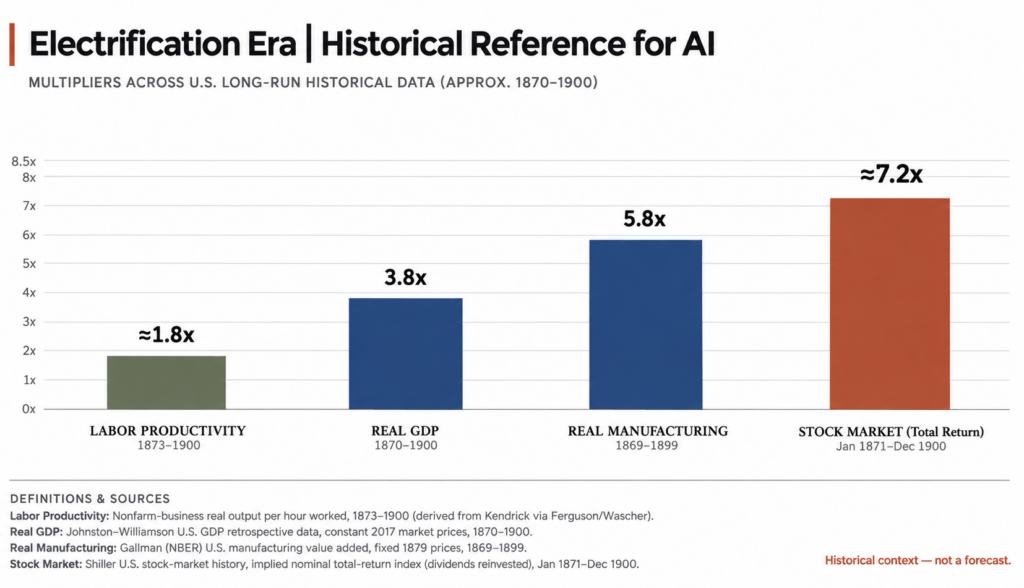
The AI buildout has mostly been treated as a spending story. Fair enough. The numbers are enormous. Alphabet, Amazon, Meta, and Microsoft are committing levels of capital that would have sounded absurd a few years ago. At some point, though, size stops being the whole story. The more useful question is whether the infrastructure is beginning to earn something back.
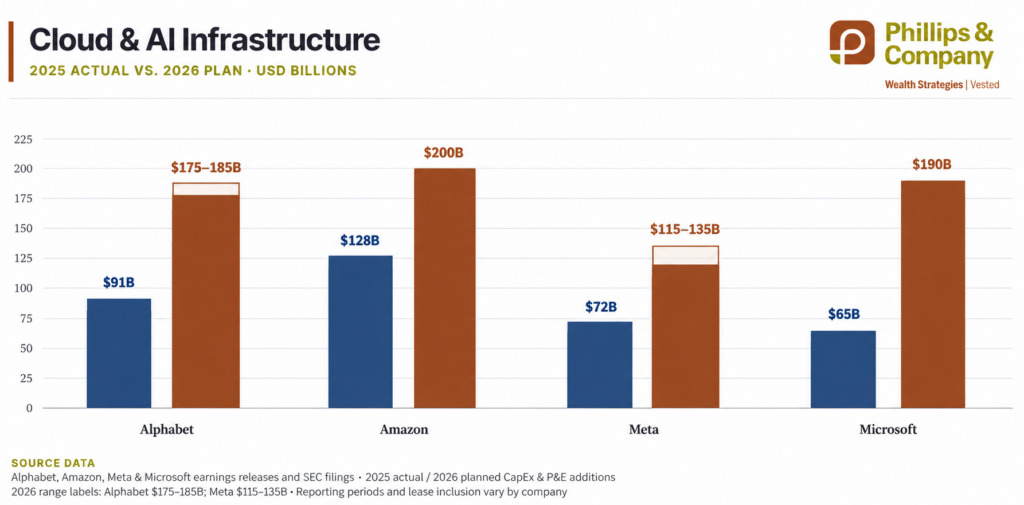
I think that is where the discussion is changing.
A meaningful part of U.S. growth is now being supported by AI-related capital investment. That does not prove the long-term returns will be great, but it does tell you the money is already working its way through the economy in construction, equipment, software, power infrastructure, and data centers. 21% of GDP growth is coming from this buildout.
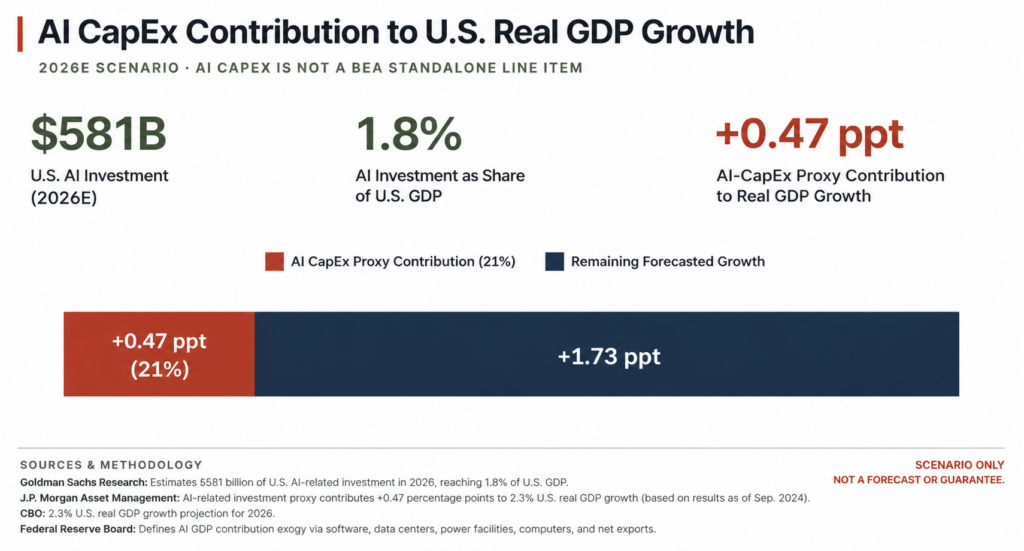
The next test is usage.
And here the numbers are getting harder to dismiss. Token volumes have exploded. What began as experimentation is turning into broad adoption across companies, developers, and consumers. When you must use the word quadrillion, you know things are getting big.
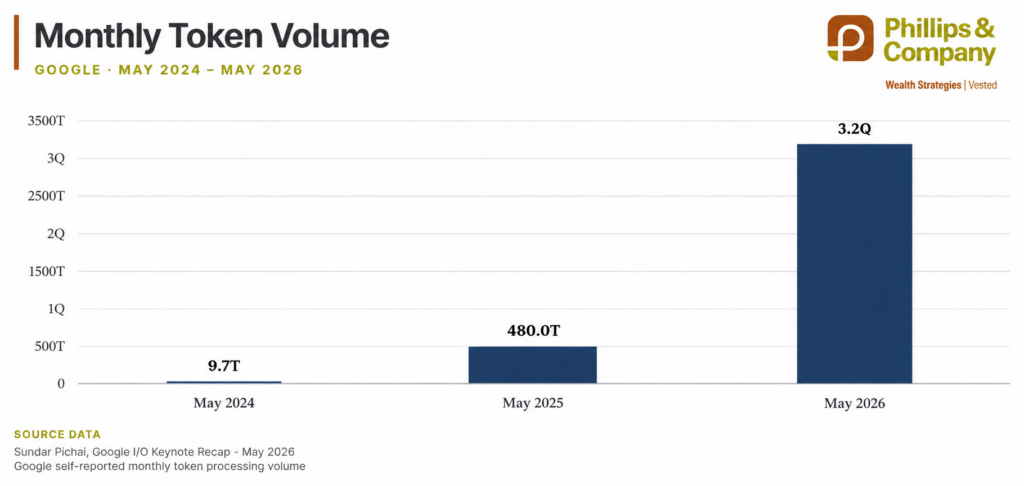
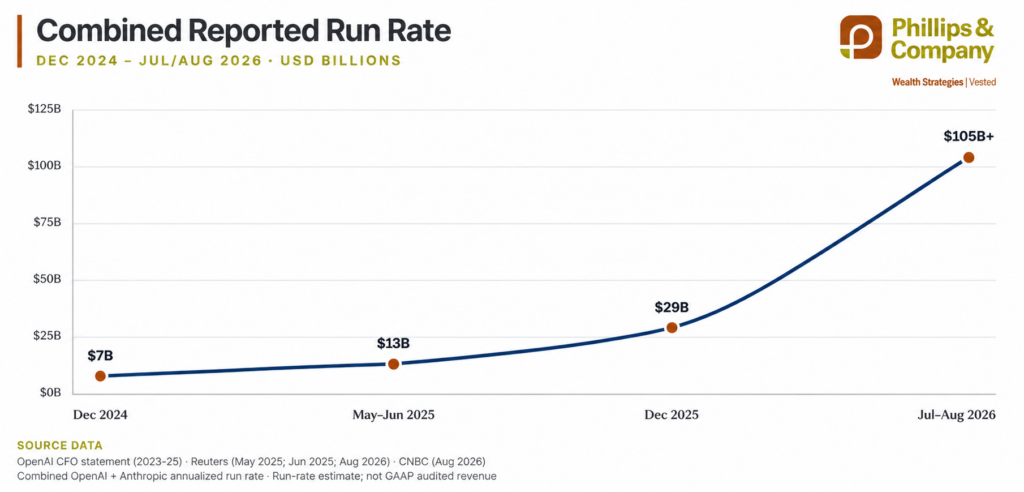
Revenue is beginning to catch up too.
For a while, the easy criticism was that AI looked like a giant capital sink supported by demos, optimism, and a lot of management enthusiasm.
Now the revenue base is getting harder to ignore. Once usage starts to scale and monetization follows, the argument changes. You are no longer debating whether demand exists. You are debating who captures the economics, who keeps margins, and who gets left behind.
That brings us back to the historical pattern.
Big investment waves do not pay off all at once. First, they boost activity because so much money is being spent. Later, if the buildout was worthwhile, they begin lifting productivity, revenues, and profits.
Electrification worked that way. Factories did not become more productive simply because electricity existed. They became more productive after companies redesigned how work got done around it.
That is the part of the AI cycle worth watching now.
Some of this spend will prove smart. Some will prove wasteful. Some companies will earn excellent returns. Others will discover that buying the shovel does not make you a gold miner. Capital cycles always produce excess around the edges.
Still, the broad direction is getting clearer. The investment is feeding into current growth. Usage is ramping and revenue is following. The next place it should show up is the one investors care about most.
Profits.
The market has spent the better part of two years arguing over whether all this capex would ever produce a real payoff. We may be starting to see the answer.
If the spending wave is turning into revenue, and revenue is turning into operating leverage, the earnings story begins to make a lot more sense.
And that may be the most important development of all.
If this continues, the conversation going into next year will spend less time on how much money was spent and more time on what that spending is producing.
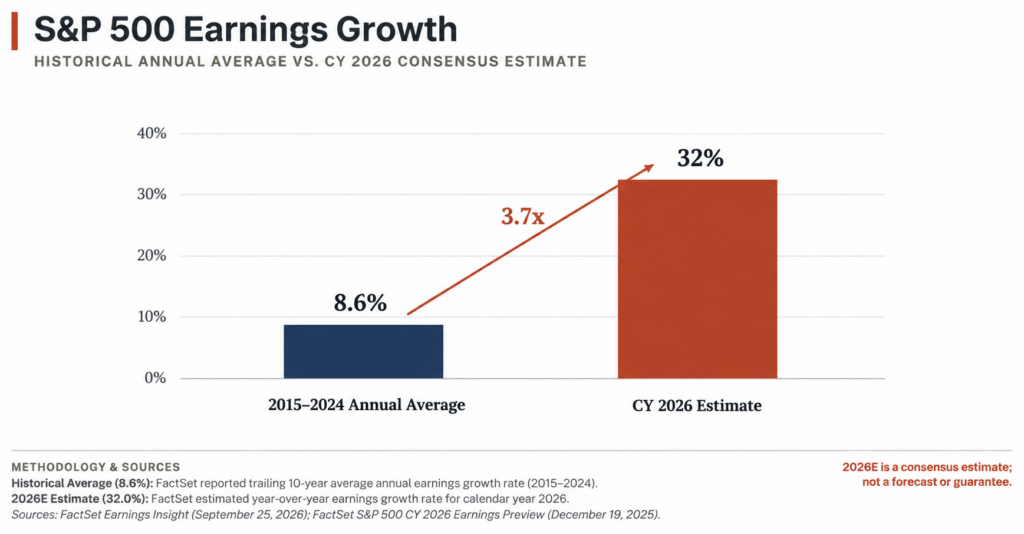
The S&P 500 earnings numbers suggest we may already be getting there.
If you have questions or comments, please let us know. You can contact us via X and Facebook, or you can e-mail Tim directly. For additional information, please visit our website.
Tim Phillips, CEO, Phillips & Company
Sources & Data References:
FactSet Earnings Insight and S&P 500 CY 2026 earnings estimates; Goldman Sachs Research on U.S. AI-related investment; J.P. Morgan Asset Management on AI-related capital spending and GDP contribution; U.S. Bureau of Economic Analysis and Congressional Budget Office for GDP data and forecasts; Alphabet, Amazon, Meta, and Microsoft earnings releases and SEC filings for 2025 actual and 2026 planned capital spending; Google I/O and company disclosures for token-processing volumes; OpenAI, Anthropic, Reuters, and CNBC for reported annualized revenue run rates; and historical U.S. economic data from Johnston-Williamson, Gallman/NBER, Schiller, and Kendrick/Ferguson-Wascher for the electrification-era comparisons. Historical comparisons are for context only and are not intended as forecasts.
The charts and data presented are sourced from a combination of public domain materials and licensed data providers. Their use is intended solely for educational and analytical commentary and falls within the scope of fair use. For a representative list of sources, please click here.
The material contained within (including any attachments or links) is for educational purposes only and is not intended to be relied upon as a forecast, research, or investment advice, nor should it be considered as a recommendation, offer, or solicitation for the purchase or sale of any security, or to adopt a specific investment strategy. The information contained herein is obtained from sources believed to be reliable, but its accuracy or completeness is not guaranteed. All opinions expressed are subject to change without notice. Investment decisions should be made based on an investor’s objective.